On this page
Why should an investor look at Dubai property?
Dubai publishes three things an investor can verify before committing capital: a statutory urban plan running to 2040, official transaction data released by Dubai Land Department, and infrastructure approvals that carry a cost and an opening date. Together, they describe the direction of the city in named figures. None of them, alone or combined, establishes the return on a specific apartment or villa.
The Dubai 2040 Urban Master Plan is the emirate’s statutory urban development framework, launched in 2021 and running to 2040. It sets land-use, population, density, transport and open-space targets across the emirate. It is the seventh development plan for Dubai since 1960.
According to Digital Dubai, the emirate’s population reached 4.580 million at the end of 2025, an increase of approximately 332,000 people over the year and a growth rate of 7.5 per cent (Digital Dubai, Dubai Population Now announcement, 2026). Population growth is the demand context for housing. It is not evidence about any one district, price point or building.
According to the UAE Government, the Dubai Economic Agenda D33 targets raising foreign direct investment from an average of AED 32 billion a year in the previous decade to an average of AED 60 billion a year, reaching AED 650 billion in total by 2033 (The Official Platform of the UAE Government, Dubai Economic Agenda D33, 2026). D33 was announced in January 2023 and covers 100 transformational projects.
This page covers the city-level evidence. The acquisition, due-diligence and exit work sits in the full Dubai property investment framework, which governs the decision file behind any individual purchase.
What does the Dubai 2040 Urban Master Plan commit to?
A master plan is a long-range government document that allocates land use, infrastructure capacity and population distribution across a defined area and time horizon. It directs where development may occur; it does not set property prices, guarantee delivery dates or commit private capital.
According to the UAE Government, the plan increases land for hotels and tourist activities by 134 per cent, expands land for commercial activities to 168 square kilometres and raises land for education and health facilities by 25 per cent (The Official Platform of the UAE Government, Dubai 2040 Urban Master Plan, 2024). Green and recreational spaces double in size over the same period.
The same page sets two environmental targets. Nature reserves and rural natural areas reach 60 per cent of the emirate’s total area, and the length of public beaches increases by 400 per cent.
The plan states its own starting point. Between 1960 and 2020 Dubai’s population multiplied 80 times, from 40,000 to 3.3 million, while the urban and built-up area increased 170-fold from 3.2 square kilometres. Those are the plan’s 2020 baseline figures, not current statistics.
Which districts does the plan name as urban centres?
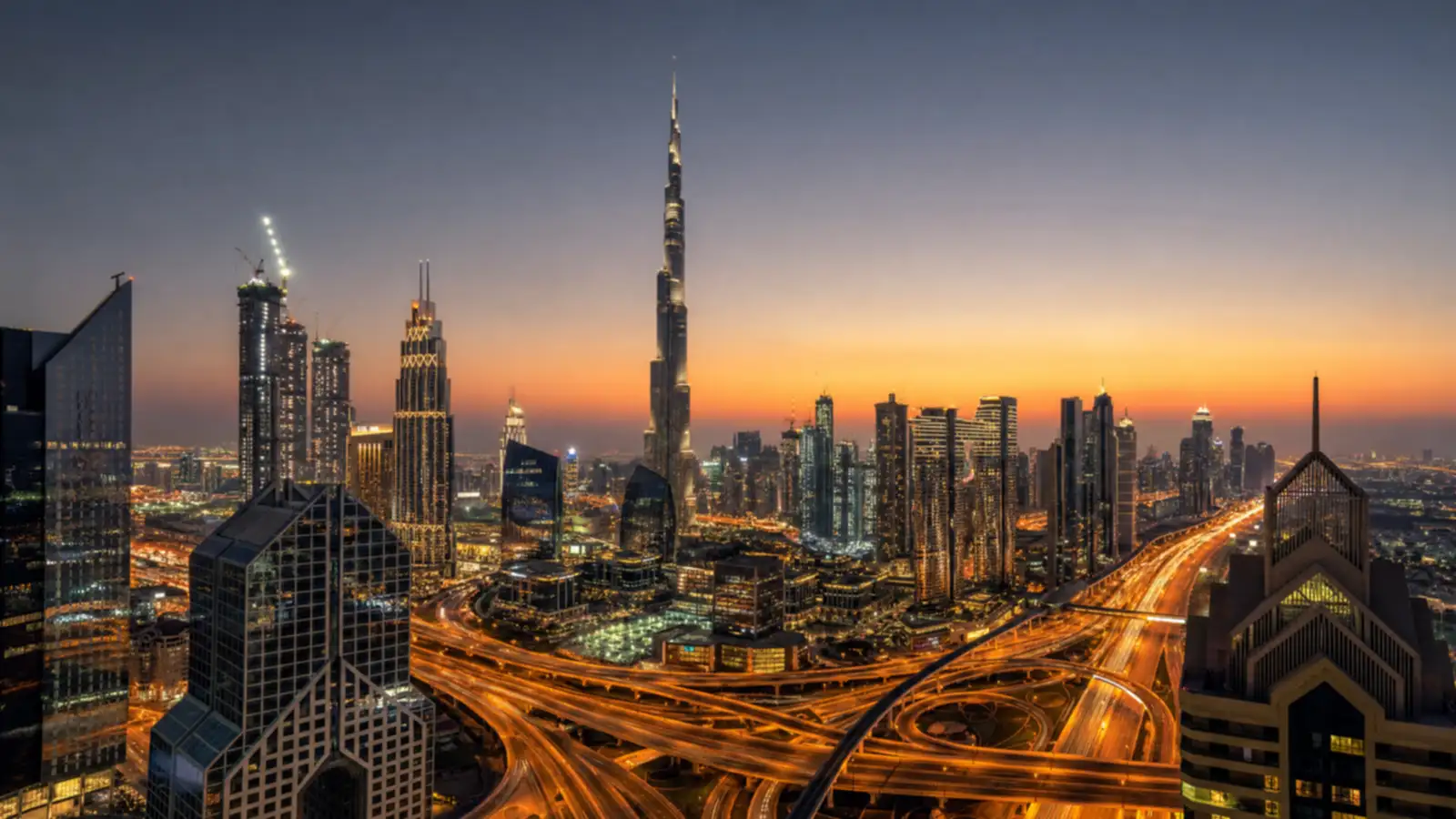
An urban centre in the Dubai 2040 plan denotes a designated concentration of employment, retail, services and higher-density housing that anchors the neighbourhoods around it. The plan names five, two of which are new: the Expo 2020 Centre and the Dubai Silicon Oasis Centre.
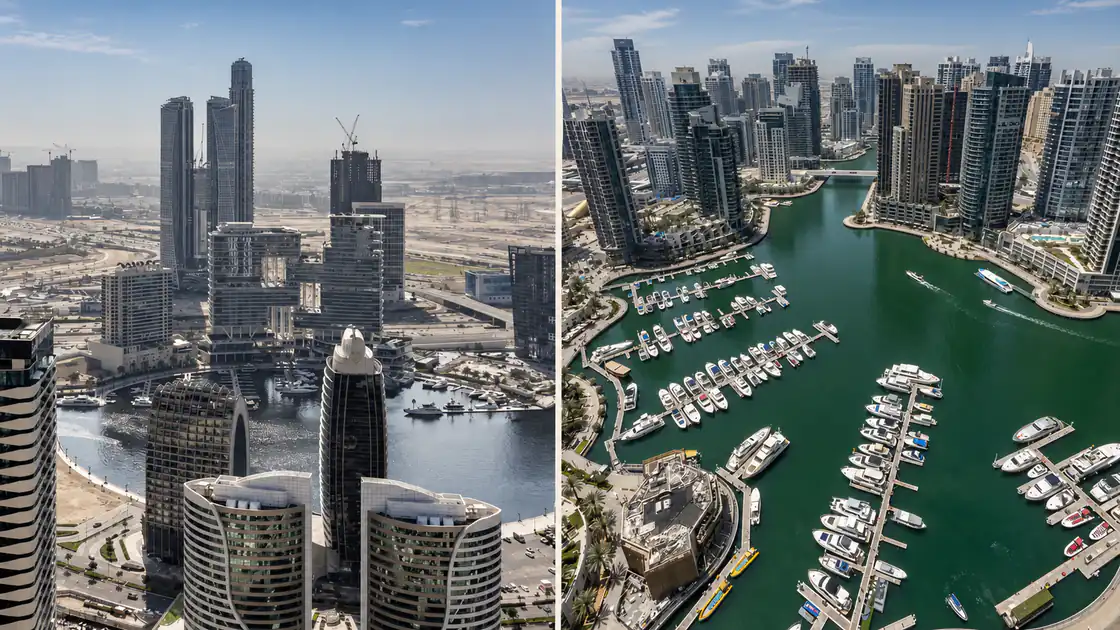
The three established centres are Deira and Bur Dubai, Downtown and Business Bay, and Dubai Marina and JBR. Each is an existing district with delivered stock, recorded transactions and a service-charge history, so the designation can be tested against evidence that already exists.
Designation states where the government intends employment and density to concentrate. It does not rank the five centres, allocate a budget between them, or indicate which will absorb new supply fastest. For the district-level detail behind one of them, read the Downtown Dubai area profile.
How much does the Dubai market currently transact?
According to Dubai Media Office, Dubai recorded over 270,000 real estate transactions worth AED 917 billion in 2025, 20 per cent above the previous year (Dubai Media Office, 2025 real estate performance release, 2026). According to Dubai Land Department, transactions reached AED 252 billion in the first quarter of 2026, a 31 per cent increase in value and a 6 per cent increase in volume year on year (Dubai Land Department, Q1 2026 transactions release, 2026).
The same DLD release records 60,303 transactions within 718,160 total real estate procedures for the quarter, and AED 173 billion of investment across 57,744 investment transactions. Value and volume moved at different rates in the same period, which is why a percentage change in value alone is not a price statement.
Transaction data measures registered market events. It does not measure the rent, net yield, holding cost or resale price of a particular unit. Read the transaction-data methodology behind these DLD figures before using any aggregate as a comparison for one property.
A freehold area in Dubai is a zone designated by government decree in which non-UAE and non-GCC nationals may hold registered ownership and receive a title deed issued by Dubai Land Department. Designation applies by area, not by the nationality of the seller. The registration mechanics are set out under freehold ownership in designated Dubai areas.
Which transport projects are approved, and when do they open?
Transit-oriented development describes a planning approach that concentrates housing, offices and retail within short walking distance of a rail or bus station. It treats station access, rather than road capacity, as the organising input for density.
According to the UAE Public Debt Management Office, the approved Dubai Metro Gold Line runs 42 kilometres fully underground with 18 stations at an investment of around AED 34 billion, opening on 9 September 2032 (UAE Public Debt Management Office, Gold Line approval release, 2026). The same release states the line expands the network from 120 kilometres to 162 kilometres, a 35 per cent increase, and raises the station count from 67 to 85.
The route runs from Al Ghubaiba to Jumeirah Golf Estates and passes Business Bay, Mohammed Bin Rashid City, Meydan and Jumeirah Village Circle. It serves over 55 development projects and is projected to benefit over 1.5 million people by 2040.
According to Dubai Government Media Office, the Dubai Walk Master Plan covers a 6,500 kilometre walkway network across 160 areas, with 3,300 kilometres of new walkways and 2,300 kilometres rehabilitated by 2040, and raises pedestrian and soft-mobility share from 13 per cent to 25 per cent (Dubai Government Media Office, Dubai Walk Master Plan approval, 2024). The plan adds 110 pedestrian bridges and underpasses.
How should plan targets be compared with an individual property?
Plan evidence and property evidence answer different questions. A target describes the intended direction of a district over years. A purchase decision needs the cost, tenancy and exit facts of one unit at one date.
| Published figure | What it measures | What it does not establish | How to test it |
|---|---|---|---|
| 60 per cent of the emirate as nature reserves and rural natural areas by 2040 | Land allocation across the whole emirate | Scarcity or price in any developable district | Compare the district’s zoning with its delivered and announced pipeline |
| Gold Line: 42 km, 18 stations, AED 34 billion, 9 September 2032 | Committed transport capacity and a delivery date | The effect on one building’s rent or resale price | Measure the walking distance from the specific unit to the planned station |
| Over 270,000 transactions worth AED 917 billion in 2025 | Registered market activity at emirate level | The net amount an owner receives after costs | Model purchase costs, service charges, vacancy and exit for the unit |
| Population 4.580 million at the end of 2025 | Resident demand across the emirate | Demand at one price point in one community | Check the tenancy record for the exact unit type and building |
| Best for | Choose plan evidence when assessing the direction of a district | Choose property-level evidence when pricing a unit | Record both, and note in writing which one is missing |
The fourth column is the work. Walking distance to a planned station, the pipeline delivered inside the same catchment, and the service-charge history of a specific building all vary within a single district.
Model the unit’s own economics before treating any plan target as relevant to it. Use the net rental yield calculator for a specific unit to apply purchase costs, service charges and vacancy to one property rather than to an emirate-level average.
What are the limitations of the 2040 plan as investment evidence?
As a land-use and infrastructure framework, the Dubai 2040 Urban Master Plan allocates zoning, density, transport capacity and open space. It makes no statement about property prices, rents, yields, resale liquidity or the return on an individual unit.
Published targets change. Delivery dates, station locations, land allocations and centre boundaries are revised between plan editions, and several figures that circulate in market commentary — daytime population, park area in square kilometres, density per square kilometre — do not appear on the UAE Government’s own plan page. Treat any figure without a named government source as unverified.
Infrastructure spending does not convert into property returns by arithmetic. A station changes accessibility. The effect on one building depends on unit quality, service charges, competing supply delivered nearby in the same period, tenant demand at that price point, financing cost and the holding period.
Two mechanisms limit a simple growth reading. Higher density adds competing supply inside the same catchment, and the quarterly record shows transaction value and transaction volume moving at different rates.
Past transaction performance does not indicate future results.
Sources and verification
- Dubai 2040 Urban Master PlanThe Official Platform of the UAE GovernmentAccessed
- Dubai Economic Agenda D33The Official Platform of the UAE GovernmentAccessed
- Expatriates buying a property in the UAEThe Official Platform of the UAE GovernmentAccessed
- Dubai’s real estate market records new historic milestone with transactions exceeding AED917 billion in 2025Government of Dubai Media OfficePublished Accessed
- Dubai’s real estate transactions surge 31% to reach AED 252 billion in Q1 2026Dubai Land DepartmentPublished Accessed
- Dubai Digital — Dubai’s Population Tops 4.580 Million by the End of 2025Digital DubaiPublished Accessed
- Mohammed bin Rashid approves Dubai Walk Master PlanDubai Government Media OfficePublished Accessed
- The Ruler of Dubai Approves Dubai Metro’s Gold Line Spanning 42 km and 18 StationsUAE Public Debt Management Office, Ministry of FinancePublished Accessed
Frequently asked questions
Why do investors consider Dubai property?
Dubai publishes a statutory urban plan to 2040, official transaction data through Dubai Land Department, and infrastructure approvals with costs and dates. Those are verifiable inputs, not a forecast of returns.
Does the Dubai 2040 plan predict property prices?
No. The plan allocates land use, density, transport capacity and open space. It makes no statement about prices, rents, yields or the resale value of an individual property.
Which districts does the Dubai 2040 plan name as urban centres?
Deira and Bur Dubai, Downtown and Business Bay, Dubai Marina and JBR, and two new centres: the Expo 2020 Centre and the Dubai Silicon Oasis Centre.
Can foreign nationals own property in Dubai?
Foreign nationals may hold registered ownership in areas designated freehold by government decree, with a title deed issued by Dubai Land Department. Designation applies by area, not by the nationality of the seller.
How current is the transaction data used here?
The most recent published figures are full-year 2025 from Dubai Media Office and the first quarter of 2026 from Dubai Land Department, both accessed on 2 August 2026.
Related reading
Guides
Dubai Property Investment Guide: A Decision Framework
A source‑led Dubai property investment guide covering objectives, buying routes, total costs, due diligence, ownership operations and clear exit planning.
Guides
Business Bay vs Dubai Marina: Investor Comparison Guide
Compare Business Bay and Dubai Marina by use, tenant fit, transport, building evidence and operating constraints without relying on unverified price claims.